Showing posts with label reviews. Show all posts

Saturday, 15 April 2017

The Signs and Wonders Movement -- EXPOSED

This is a book report I did as part of a Spiritual Life assignment at Steinreich Bible School.

*  * *

The Signs and Wonders Movement—EXPOSED is authored by Mark Haville, Chris Hand, Philip Foster, and Peter Glover, each of whom discusses a particular aspect of the “signs and wonders” movement/Word-Faith Movement. Haville shares his personal experience as a former Word-Faith minister, Hand about the “Toronto Blessing” and its fruit, Foster about what is really happening when leaders perform many so-called signs and wonders, and Glover about what the Bible says about signs and wonders and their place in the church today. What I would like to discuss further is the character of many “signs and wonders” leaders, what is actually happening at the meetings, how it compares to what the Bible teaches, and some more personal reflections. This is something I was often very suspicious of when I heard about it or saw it on videos, and this book has given me the confidence that what I see is not the working of the Holy Spirit.

First, Haville gives a lot of insight as to who the leaders in the movement really are and what their lives look like. Many of these preachers experience great personal fame and fortune, and a lot of the money raised for them at meetings only serves to increase their personal comforts. Their “seed sowing” teachings aren't benefiting the givers, but serving to line their own pockets. Many claim exaggerated numbers of converts, many of whom are never seen in churches again. Also, Haville noticed that many preachers wanted nothing more to do with ordinary people after their meetings were over. This kind of character and lack of integrity in leaders is enough to raise serious questions among believers. However, many also claim to have received personal revelations directly from God, which are not necessarily supported by scripture. All of this, completely apart from the fact that what they're doing at meetings is merely a performance, falsely taught as the working of the Holy Spirit, is enough to ask if they're really preaching according to God's will, or if they're actually wolves dressed in sheep's clothing.

What is happening at many Faith-Word meetings is far from “manifestations” or “anointings” of the Holy Spirit. These so called “manifestations” are often characterized by people falling over, laughing or shaking uncontrollably, becoming rigid like statues, having visions, or experiencing emotional and physical healings. (Also, interesting to note is that 95% of people have a “good trip” in a trance, but 5% have a “bad trip”, whereby they are often damaged for a long time.) What is actually happening though is stage hypnotism, where the leader draws people into alternate states of consciousness. This is a process leaders have been taught by other leaders, and many don't even know that what they're doing is related to occultic practices and opening people up to dark spirit worlds. The preacher has to be in complete control of the proceedings, build expectation, and create an atmosphere that brings people into trances. Music is a big part of how they do this. Attendees are taken through a process where they are encouraged to empty their minds, not to think, not to pray, not to analyze what is happening to them but rather to “just drink.” In the end, what people experience can all be achieved by hypnosis, and the physical healings people claim are temporary, something that can also be achieved the same way. Also, Haville points out that a lot of modern speaking in tongues is nothing but gibberish, something that can be learned as well, whereas genuine speaking in tongues can't be done randomly at a person's own will. These explanations all make it very clear that this isn't God moving; not on His own, and not through occultic practices.

What the book analyzes as well is what does the Bible teach about signs and wonders and how does it compare to what is really happening. A big emphasis, which I think is very important, is how the Holy Spirit is the primary focus in these leaders and at these meetings. However, the Bible clearly states that the purpose of the Holy Spirit is to testify of Jesus, not of Himself. Also, signs and wonders in Acts were performed primarily by apostles and a few others closely connected to them; it was not common or normal for all believers, nor should we expect it to be today. “We are not called to expect on-going signs and wonders. The sign-gifts were for a very specific purpose and attached to a very specific office—that of the apostle.” (pg. 91) The authors do believe that God still works signs and wonders today, but that they are not the norm and are performed at God's will, not man's. The Bible also never tells people to empty their minds, stop thinking, or stop praying, but rather to pray, be watchful, sober, awake, and to test the spirits. Although there are indications in Acts that it was a significant event when believers received the Holy Spirit, it never tells of people being unable to control themselves, falling down, or laughing hysterically as a result. What I'm not sure of is if I agree with all of Glover's points about how little place there is for signs and wonders or apostolic gifts now. I would not call myself a cessasionist, but I think he brings out good points of what we need to beware of, and I believe that a large amount of the spectacles we see are not actually God at work.

There were some things I personally noted through reading the book that also helped me to see more that the “signs and wonders” movement is not of God. In having to be in complete control of meetings and “anointing” people at their own will, it became clear to me that many of these leaders are seeking to put God under their control, rather than placing themselves under God's control. They want to decide what God does and when. Also, throughout the book, I had to consider what people are seeking at these meetings. Foster explains how people become addicted to the euphoria they experience in their trances and return to meetings, seeking the same experiences again and again. This reminds me a lot of the “high” people often seek in drugs and sex. Could it be that most are just seeking a self-fulfilling “feel-good” experience? And finally, what is noted in the book, and I also see in the Bible is that a lot of people just want a show. They want to see something exciting happen. It's nothing new; people came to Jesus repeatedly seeking signs, but He knew their hearts and knew it wouldn't cause them to believe in Him. I would venture to say that overall, the hearts and intentions of many leaders and attendees of these meetings are just not right.


I would be quick to recommend The Signs and Wonders Movement—EXPOSED. It's something I have long been suspicious about, and now I understand that was for good reason. Many of the leaders don't deal with integrity and they are (knowingly or unknowingly) deceiving thousands of people by telling them they're experiencing the Holy Spirit when really they've been trapped in occultic practices. They encourage practices and produce results not found in scripture, but rather engage in occultic practices that the Bible forbids. The results produced by these “anointings” are not scriptural. Also, leaders seem to be trying to make God their servant, and attendees are seeking self-fulfilling experiences to make them feel good. I'm glad I read this book and now understand what many of these so-called “signs and wonders” are really all about.

Tuesday, 6 December 2016

Pancho: A Low German Feature Film for the Whole Family

Yesterday, my husband and I went to see Pancho at SBS. Pancho is a feature length, Low German film by Will Friesen, who is well known for his comical Youtube videos in Low German. Later this week, there will be numerous more screenings at the Mennonite Museum.

Pancho is a coming of age story about, well, Pancho, who is growing up, and wrestling with no longer having a Mom. It is set in Cuauhtemoc, Chihuahua, where Pancho is spending his summer doing small jobs, riding his bike, playing ball, squabbling with his little sister, and hanging out with friends. But he's not prepared for the changes that are coming.

Pancho is a good film that the whole family can enjoy. I found that the story moved a little slow at first, but during this time, the character was well developed and the viewer could understand who Pancho was and what he was going through. It dealt well with the family's struggles and brings them to a solid conclusion. It will make you laugh and it will make you cry.

For me, it was exciting to see a movie filmed in the area where I live, about Mennonites who speak Low German. I think Will has done a great job capturing some of the culture, and I was glad he touched on some of the themes he did. I would encourage anyone in Chihuahua to go support Will and enjoy a good movie with the family later this week the the Museo Menonita, km 10. The entrance fee is $50 per person.

Show Times:

December 8,9: 6pm, 8pm
December 10: 4pm, 6pm, 8pm
December 11: 2pm, 4pm, 6pm, 8pm

And for my friends in Ontario, watch for Pancho coming to Aylmer and Leamington in the New Year!

Monday, 26 September 2016

"One of the Few" Review

"One of the Few" is the account of Marine fighter pilot Jason Ladd's journey to faith and the belief system he has come to embrace. It follows his story from childhood through college, and well into his adult years, taking the reader to many locations around the globe. Jason recounts his younger years, being passive to the idea of God, until he was forced to think about what he really believed when challenged by his wife. With time and searching, he comes to embrace the faith that he further presents in the his book.

Aside from his personal testimony, Jason uses his experiences to draw comparisons between military service and the life of a Christian. He tackles many engaging topics, including Christians serving in the military, the transgender movement, pornography, marriage, alcohol abuse, and why various worldviews have become so popular. This variety does make for an engaging read.

Jason finished the book better than he started. The first part was less engaging for me. This was partly due to all the military terminology, which I am largely unfamiliar with, although he does try to explain as much as possible. I found that many of his illustrations didn't flow well. He touched on some subjects, but didn't discuss them fully, leaving me with questions. There were also inconsistencies in some details, causing confusion, and some incorrect facts were overlooked.

However, the style did improve as I progressed and the author was more successful in engaging me. Jason shares his beliefs with strong conviction. He is not afraid to share what he personally believes. He doesn't shy away from sensitive topics and chooses to speak up against them, rather than stand on the tolerance fence. The reader is left without a doubt that the author has truly been transformed.

"One of the Few" is a worthwhile read, exploring the life of a Marine, questions about faith, and the answers with the power to change a man. It provides a well-informed perspective on various worldviews and emphasizes the importance of holding to one, as well as teaching our children, instead of leaving them to search for answers on their own. This is a book that will perhaps challenge you to get off the fence and choose where you stand.

I received a complimentary copy of this book from the author and was in no way compelled to write a positive review.


As posted on Amazon.com.

Wednesday, 29 May 2013

Is College Worth It? by William J. Bennett and David Wilezol

In Is College Worth It?, William J. Bennett and David Wilezol "expose the broken promise of higher education."  They examine the financial crises caused by student loans, the rising tuition costs, how tuition money is being misused by universities and how many students are often unable to find employment with their degrees after accumulating thousands of dollars of debt. They take a hard look at the quality of education students are receiving and whether or not a college education is worth the investment. Alternative post-secondary educational options for various types of students are also discussed.

There were several aspects of this book that I appreciated, like how they exposed the misuse of student and taxpayer money at many universities to pay presidents and faculty outrageous salaries, offer programs and courses with little academic value, and improve campus aesthetics.  It opened my eyes to how much our culture looks down on blue-collar jobs, when there's actually a great need for skilled workers to fill those positions.  It also points out that classic literature, disciplines and character training are no longer being taught, nor do students learn to effectively write, speak, teach or make decisions.  Tolerance and diversity has become the great mission of many universities, meanwhile identity studies are actually damaging to individuals and societies.

However, despite the positive qualities, I also found the book to be quite boring at times.  I recognize that statistics and numbers are necessary to prove where the education model is lacking, but I think the information could have been presented in a more interesting manner.  Although the book is definitely informative, I don't think a teen considering what kind of post-secondary path to pursue would likely read through the book far enough to make an informed decision. Overall, I would rate this book 3 out of 5 stars.

I received a complimentary copy of this book from the publisher through www.Booksneeze.com and was not required to write a positive review.


Sunday, 31 March 2013

Gods at War by Kyle Idleman

In Gods at War: Defeating the Idols That Battle for Your Heart, Kyle Idleman makes the argument that idolatry is not an issue, but the issue.  He explains how all sin and issues we face in our Christian lives are the result of idolatry and that it's not a matter of if we worship, but rather who or what we worship.  He goes on to examine in detail nine gods that are prevalent in our culture and in the church: food, sex, entertainment, success, money, achievement, romance, family, and me.

Kyle uses a conversational style in his book and helps make his points through stories and fact/research study boxes. He looks at a few gods that are perhaps not often addressed within the church.  I appreciated the Idol ID boxes with questions that helped identify whether or not something has become an idol in your life, followed  by a section on how to replace that idol with Christ.  I did find Kyle was a little repetitive at times.  Some of the stories and humour gave me a good laugh, but there were some points I thought were a little "cheesy."

I thought this book was good, although not amazing.  It helped me come to terms and address some idols that have taken hold in my life.  It provides a good evaluation of which gods may be present in your life if you're willing to look at yourself honestly.

I received a complimentary copy of this book from the publisher through Booksneeze.com and was not required to write a positive review.

Friday, 22 February 2013

Who Do You Think You Are? by Mark Driscoll

Who Do You Think You Are: Finding Your True Identity in Christ by Mark Driscoll is essentially a study of Paul's letter to the Ephesians.  As the subtitle suggests, it's about understanding our identity in Christ and each chapter focuses on a different aspect of our identity.  He starts each chapter with a story and uses scripture to help the reader understand that we are in Christ, saints, blessed, saved, reconciled, afflicted, gifted, forgiven, loved, victorious, etc.

This book captivated me from the first chapter.  Mark is very direct, his message comes through strong and clear and his words are thought-provoking.  Yes, the book is fairly theological, but not to the point where it's difficult to understand.  It helped me to better understand my position in Christ and that my identity is not shaped by the things I do, but rather that understanding my identity will shape the things I do.

The setup of this book is great.  Mark references a lot of scripture, but he puts the references in footnotes, so it doesn't clutter the pages.  Notes and references at the end of the book allow you to dig deeper into things without them being distracting.  This makes it easy for someone to simply read through or study on a deeper level.

There were some theological points I didn't quite agree with, but nothing that would hinder me from recommending the book to others.  I would definitely encourage all Christians to read it, and keep a notebook and pen handy so you can learn as much as possible.  This could be a great tool to help Christians understand their identity and live victorious lives.

I received a free copy of this book from the publisher through Booksneeze.com.  I was not required to write a positive review and the views expressed are my own.

Monday, 14 January 2013

Why Pro-Life?

Here is my latest book review on Why Pro-Life?: Caring for the Unborn and Their Mothers by Randy Alcorn.  This is a short, informative book that the average reader could read in just a few hours.  In it Randy covers a lot of the hot and difficult questions surrounding the abortion issue.  Is the fetus really a human?  Is the fetus alive?  Is he part of the woman's body?  What makes human life meaningful?  Do we get to choose what happens to our bodies?  Do we get to choose whether a baby lives or dies?

He not only covers these topics, but also discusses the effects of abortion on the woman afterward, and the effects it has had on our society.  He doesn't shy away from the circumstances where some believe abortion is justifiable due to rape or extreme medical conditions.  He also shares the salvation and forgiveness a mother can receive if she has had an abortion, as well as suggestions for what people can do to get involved in helping the unborn and their mothers.

Randy keeps his chapters short and concise and his arguments based on medical evidence and research.  It's a great resource for anyone who wants to learn more about abortion and the pro-life view, or to become equipped with answers to the frequently asked and difficult questions that arise with the topic.  I definitely recommend it.

Friday, 31 August 2012

Wisdom Meets Passion

Wisdom Meets Passion by Dan Miller and Jared Angaza is written by a father and son team.  It blends the wisdom of the older Baby Boomer generation and the passion of the younger to show how you can live a meaningful life.  The older generation put a lot of emphasis on secure jobs and retirement plans while the younger generation wants to make a difference in the world.  This team of authors shows readers how to blend wisdom and passion to live a purposeful life and do work that matters.

Wisdom Meets Passion is an inspiring and motivational book.  There are lots of inspirational quotes throughout the book, but the authors never use them to make up for lack of content. I appreciated the perspective on non-traditional forms of education and entrepreneurship, as well as Dan's emphasis on having a clear, specific mission statement for your life.  He encourages readers to blend their passions, talents and skills and apply them to do work they love.  I could also identify with the challenges he faced through his conservative Mennonite upbringing and I believe he addresses these challenges in a respectful manner.

I did not agree with some of the theological ideas in this book.  I admired Jared's passion and life of service in Africa, but I was a little turned off by his great emphasis on philanthropy without much of a focus on Christ.

Overall, I enjoyed and learned a lot from this book.  It left me inspired and caused me to reconsider applying my skills and talents to pursue an entrepreneurial venture.  I would definitely recommend this book to people who have a desire to live above the mediocre expectations of this world and try new things.

I was provided a complimentary copy of this book by the publisher through Booksneeze.com and was not required to write a positive review.

Friday, 24 August 2012

Feeling Restless?

Have you ever felt restless and discontent as a Christian?  Have you ever felt that God has a greater purpose for your life, but you just don't know what it is?  I've felt that way many times.

I learned why Christians often feel this way while reading a book by IJM's founder Gary A. Haugen.  It's called Just Courage: God's Great Expedition for the Restless Christian.  Although I wouldn't say he has the answer for all cases of Christian discontentment, he brings out a truth that is so simple, obvious, and get so profound.  Gary has it right when he says "Earnest, gifted, mature Christians--we feel like we're all dressed up with nowhere to go."

The fact is, we as Christians have not been created and saved for the sole purpose of our own spiritual growth, and to grow in our careers, churches and ministries.  And yet that's all so many of us are doing.

"If we believe, for example, that our own rescue, redemption and sanctification in Christ is itself the ultimate destination, then the answer to the Now what? question is--well, nothing . . . Indeed, the idea that there is nothing beyond our own spiritual development isn't meant to be satisfying--for our rescue is not the ultimate destination; it is the indispensable means by which God works out his plan to rescue the world."

We have been rescued to be rescuers to a hurting world, but because so many of us aren't willing to do that, we continue to be discontent.  It's not that we don't know the commands of Christ, or don't want to do greater things, or help those in need.  The problem is that we are only willing to follow Christ as far as it's safe, as long as we feel in control.  As soon as there's more risk, warning signs, and we're not guaranteed to come home to our comfortable, North American lives unscathed, be back out and decide to stay safe.  We have a yearning to be brave, but we want to be safe.  The truth is, we can't have both.

I appreciated Gary addressing parents specifically in this book on two levels.  For one, he encouraged readers to relate to the problem of human trafficking from the perspective of a parent.  There are so many parents in the world who helplessly have to watch their children suffer, and all they need is just a fighting chance to give them a better life.

Second, he addressed parents who's children want to go out and do significant things with their lives, but they won't let them because they want to protect their children.  But children are disappointed to realize that their parents have poured so much into them only to keep them safe.  Gary says that these children will either perish in their safety or they will go looking for adventure in all the wrong places.  I appreciated this because I have dealt with a lot of frustration in this area and I think parents need to see this.

"Are we raising our children to be safe or to be brave?  Are we raising our children to be smart or to be loving?  Are we raising them to be successful or significant?"

I was inspired by this book.  I was inspired by Gary sharing his own life stories and appreciated him sharing his fears in starting IJM, afraid of it failing and end up looking like a fool.  Since I'm pursuing an IJM endeavour at the moment, this was a great encouragement to me.  I'm often afraid that something won't work out and I'll only end up looking like a fool. I will leave you with his words that helped me to keep going.

"When I am fifty, do I really want to look back and say, Yeah, I sensed God was calling me to lead a movement to bring rescue to people who desperately need an advocate in the world, but I was afraid of getting embarrassed and so I never even tried?"

Friday, 6 July 2012

Good News About Injustice

I have spent the past month reading Good News About Injustice: A Witness of Courage in a Hurting World by Gary Haugen, founder of International Justice Mission (IJM).  Haugen started IJM after investigating the Rwandan genocide in 1994 among the nearly one million bodies, mostly of women and children, that were brutally hacked to death.  Good News About Injustice takes a hard look at the injustice that exists in our world, examines the biblical call to justice, explains how a Christian can prepare for the work of justice, explains how injustice works and how IJM works against it.

One of the main things Haugen deals with in his book that I greatly appreciated is the topic of hope.  When we look at the atrocities that happen around the globe, it looks hopeless from a human standpoint.  But it isn't from God's.  Haugen shows readers how we can put our hope in the God of justice, compassion, moral clarity and rescue.  This is something we have to understand if we want to see change in our world.

In the discussion guide in the back of my book, there's a quote by C.S. Lewis: "Despair is a greater sin than any of the sins that provoke it."  The question was to reflect on this and determine whether or not we agreed and why.  I didn't have to ponder this long before I determined it to be true.  Despair indeed is a greater sin than the sins that provoke it.  Why?  Because despair gives power to sin.  Despair says the sin is too great and too difficult to conquer.  Despair gives power to sin and Satan and thus belittles the power of our great God.  But the truth is Christ has power over sin, and because of that, we can have hope!

Hope is important because it recognizes that God is in control and that He will one day have ultimate justice on the earth and make all things new.  Hope is crucial because it recognizes that those suffering can be rescued, and by God's grace, they can experience healing and renewal in their lives.  And the beautiful thing is that God raises up His children to be a part of this, to be His hands and feet, to bring love and compassion to the hurting and give them hope as well.

No, injustice is not a hopeless problem.  There is hope for the little boy slaving in a brick kiln, working to pay off his grandfather's debt.  There is hope for the girl who was promised a good job, but rather finds herself sold into a brothel instead, raped repeatedly every day by lustful men and treated as a commodity, not a person.  There is hope for the man wrongfully accused and imprisoned and the widow forced off her property, having everything taken from her simply because her husband died. 

There is hope!  And as Christians, we are to put our hope in the God of justice, the God who desires to bring about justice on the earth, and then be His instruments to bring hope to a hurting, dying world.  Are you willing to be that hope, to be a part of the good news about injustice?  Then read the book and learn what you can do.

Wednesday, 21 March 2012

Think Big: The End Goal

I've been slowly making my way through Think Big: Unleashing Your Potential for Excellence by Dr. Ben Carson the past few weeks.  The first half of the book is largely biographical and details Ben's childhood and much of his medical career.  He places a lot of focus on the mentors in his life.  One of his stories in particular has left me with much to think about.

In high school, he had a band teacher, Mr. Doakes, who always pushed his students to give their best and perfect every piece of music they played.  Although Ben always appreciated this teacher and his confidence in his class, other students didn't and even referred to him as a slave driver.  In time, with Mr. Doakes' instruction and encouragement, Ben rose to the top of the class, just like in every other class.

One day, the teacher announced that four students in the class were eligible to audition for a prestigious summer music camp scholarship.  This was a camp that would provide gifted students with heavy-duty instruction and the opportunity of traveling the country and performing under famous directors.  Any student's acceptance into this program also reflected very favourably on his or her band teacher.

Of course, Ben asked Mr. Doakes if he though he was good enough.  Mr. Doakes assured Ben of his confidence that he could win this scholarship.  But when Ben asked if he would recommend him, he said "No."  You see, this teacher knew how well Ben was doing in his academic work and that he wanted to be a doctor.  He knew that the intense music camp would not allow Ben to focus on his other work.  Somewhere down the road, Ben had to make a choice between either music and science/medicine.  Knowing his heart was to be a doctor, the teacher said "No".

As we can imagine, Ben was very disappointed by this.  But walking away, he realized his teacher had done the most caring thing for him.  Mr. Doakes knew Ben's potential and his gift in music, but he also knew that this intense program would require a lot of time and energy and pursuing music to this degree would take away from his ultimate goal of being a doctor.  Although the teacher could have advanced himself through Ben, he was unselfish and told Ben "No", ultimately having his best interest in mind.  As it turns out, Ben's wife received a scholarship to this music camp while she was in high school.

You can gather many things from this story, such as the importance of mentoring and guiding a young person to make right decisions, even when they won't want to hear it.  But what struck me was just the fact that this teacher would not allow Ben to pursue something that would distract from his ultimate goal.  It reminded me of a conversation I had with a mentor several months back.  He basically said that if something does not allow me to fulfill my purpose, then I shouldn't spend time doing it.  That was hard for me to digest.  That meant having to cut some activities out of my life that I liked.

I have a confession to make.  I excel at wasting time and surrounding myself with distractions.  And I don't even have a personal cell phone!  I can procrastinate and avoid tasks I don't like by coming up with a ton of good "reasons" why today is not a good day.  And if I know I really have to do something, I'll do anything to delay, even if it means checking my facebook like ten times even though I know there's nothing new there.  Yeah, it's bad.

If you consider it honestly, very few people in our culture have a clear vision or purpose for their life.  And for the few that do, there are a host of potential distractions to take away from them fulfilling that purpose.  I'm facing that challenge.  It's not that I don't know where I want to go or what I want to do.  But somehow, what should be my free time to pursue those things get filled with an abundance of trivial, unimportant time-wasters and I feel like I have no time. 

There's so many things that can take away from our goals and our relationship with God.  Sometimes the decisions we have to make are hard.  Like Ben, there are things we enjoy and are very talented in, but since they don't contribute to our end goals, then often we have to let go of them to a degree.  It usually doesn't mean that we have to forsake them completely, but we do have to limit the amount of our time and energy they consume.

What is your vision?  Have you identified your purpose or your life goals?  Whether they are spiritual, family, educational or career ambitions, are you pursuing them fully? Or are you letting other trivial things stand in the way?  Sometimes, we have to sacrifice even the things we hold close to us if they don't lead us closer to God and the vision He has given us.  But in the end, I believe we will look back and see that it's worth it.

Saturday, 10 March 2012

God Loves Broken People by Sheila Walsh

In God Loves Broken People, Sheila Walsh examines what brokenness is, the painful wounds people experience, and the fierce love God has for us.  She also explains how our brokenness can enable us to serve and reach out to others.   She uses a lot of stories, scriptures, quotes and a Bible study is included in the back of the book.

Something I like about this book is that Sheila understands what pain and brokenness is from personal experience and she's real about it.  She doesn't sugar-coat suffering, suggest the reader should just "suck-it-up", or imply that the reader lacks faith.  She doesn't offer answers to life's tough questions, but she understands the depth of pain and darkness that exists in the world and doesn't undermine it.  The stories and quotes she used gave it variety and I enjoyed it, but at times, it felt as if she borrowed a little too much other material.

Although I liked this book, I couldn't relate to the depth of pain often described.  I discovered how blessed I am in many ways!  To those who have experienced pain and suffering in their lives or are going through a dark time, I would definitely recommend this book.  If life has handed you sunshine and roses, you may still enjoy it, just not be able to relate to it as well.

I received a complimentary copy of this book through Booksneeze.com and was not required to write a positive review.  The opinions expressed are my own.

Saturday, 14 January 2012

The Final Summit by Andy Andrews

In The Final Summit, a sequel to The Traveler's Gift, traveler David Ponder has become a successful man by implementing the Seven Decisions that Determine Personal Success.  Now he has been chosen by the archangel Gabriel to be the leader of a summit to prevent the final destruction of the world.  Together, the travelers must determine what humanity needs to do in order "to restore itself to the path toward successful civilization."

The Final Summit provided a lot of information about historical figures, both well-known and little-known.  The character of Winston Churchill often lightened the tense mood with his humourous personality.  The conclusion the characters came to was simple, but if applied, the ending principle could perhaps have a significant effect on the reader's life.

This story had some good insights, but they weren't profound.  I didn't glean as much from it as I did from The Traveler's Gift.  I felt the pacing was slow at times and the author took a long time to get to the point of the story, which he could have expanded on a little more.  I had to push myself at times to get to the end.  The story was good, but it wasn't life-changing for me personally.  Overall, I was a little disappointed.  The Traveler's Gift  should be read first, and was in my opinion a better read.

I was provided with a complimentary copy of this book through Booksneeze.  I was not required to write a positive review and the opinions expressed are my own.

Friday, 6 January 2012

Alien Love by Kevin Abell

Kevin Abell is releasing his new book Alien Love this month! Having already had the privilege of reading it, I'm here to share my review with you.  First of all, Kevin is a friend, so perhaps my review could be considered biased, but I am being honest here.  He wouldn't have wanted anything else.  I might also add though that the author was to me a writer first; it's only because he published his first book that I ever got to know him.

I might as well begin by saying that I was afraid to read Alien Love.  Don't get me wrong.  I wanted to read it, but I was afraid of what it would do to me.  Love isn't always my favourite subject of discussion.  It's the area in which I lack the most as a Christian.  I often avoid messages specifically on love because they never make me feel good about myself.  I also don't like it when other Christians make love sound easy. Kevin doesn't.  In short, I likely wouldn't have read this book if Kevin hadn't written it.

To describe what this book is about in one line, I think I would have to say this: it's an overview of what love is and how it's demonstrated, a hard look at our sinful nature, and an explanation of the Gospel and the Christian life.  Kevin explains what love is and examines the attributes of love as described in 1 Corinthians 13.  He describes the seriousness of sin, how it's all equal, how we're all equally guilty and can only compare ourselves to God's holy standard.  He then goes on to lay down a clear explanation of the Gospel and the Christian life in a way that anyone can understand.

There were numerous things I particularly enjoyed about Kevin's book, of which I will share a few.  First of all, it's simple; he doesn't get complicated or stuff his writing full of deep theology.  He starts his chapters off with stories, often from his own life which kept me engaged throughout the book and often amused. He illustrated the attributes of love in a way that gave me a fresh perspective.  He explained that if we really understand God's creation and love for mankind, it will dramatically change the way we treat those around us. Kevin also isn't afraid to speak truth, talk about sin for what it is, nor does he shy away from often messy topics.  This is much needed in our time.  Throughout the book, he keeps coming back to the Gospel and effectively points his readers toward Christ.

Having said all that, reading Alien Love will NOT make you feel good about yourself if you read it with an honest, open heart.  It made me quite uncomfortable at times and I didn't always like everything he had to say. But it was truth straight from God's Word, and it didn't change just because my flesh didn't like it. Reading this book made me see once again how miserably I fall short. It exposed my sin, my lack of concern for the lost, and showed me how much still needs to change in my life. If this book doesn't leave you examining your life, I'd have to say you missed the whole point.


Has this book changed my life?  Not yet.  But I do believe that if I apply the principles in this book to my life, it will change me.  I have no doubt about that.  As a reader, I must move past the intellectual understanding and actually live it.  It's not easily done, but I know it will be worth it.

Kevin has a sincere desire for people to come to Christ and it reflects in Alien Love.  He doesn't write like someone who has it altogether, but is real and honest.  Although I haven't read The Edge of His Cloak in two years, I'd have to say his writing has improved much since then. Alien Love is a book I would highly recommend to all my readers.

Kevin writes an excellent blog at Blue Collar Christianity, which you can check out as well.  He is also having a book launch later this month.  For readers that live in the area who would like to hear Kevin speak and get your copy of Alien Love (available in paperback and hardcover), it will be held at the Aylmer Old Town Hall on January 28 at 6:30pm.  Please come out and show your support. 

Wednesday, 14 December 2011

Lies Young Women Believe

A couple months ago, the girls in my youth group started going through the Lies Young Women Believe: And the Truth That Sets Them Free study by Nancy Leigh DeMoss and Dannah Gresh.  In all honesty, before we started, I didn't think I needed it.  As it turns out, I didn't realize how badly I did need it.

Lies Young Women Believe examines the 25 most common lies Christian young women believe about God, Satan, themselves, relationships, guys, media, sin and their futures and reveals God's Truth about them.  There's a Companion Guide that goes along with the book, which I would definitely recommend using.  It splits the book into a nine week study and there are study questions and exercises that correspond with what you're reading that week.  They also make good use of colour and graphics so it's visually appealing.  Sure, you may wonder why you need to spend the money on two books (so did I), but it is well worth it.

When I started this study, I knew there were many areas of my life that needed to change, and as much as I wanted the change, I was afraid of the pain that would come with it.  This book doesn't just expose lies we believe; it exposes sin.  It doesn't beat around the bush.  It looks at gritty issues for what they really are.  There were many issues that came up in this study where God was already convicting me.  There were things that He was repeatedly teaching me and were coming up in so many different places, that I just couldn't run from them.  I had to face head-on lies I was believing about sin, purity, authority and media and deal with them.

One of the blessings that came out of this study was simply spending more time in the Word aside from just my morning devotions.  This study wasn't about the book, it was about the Book, and it sent you searching through the scriptures all the time.  It also emphasized memorizing scripture, something I always want to do, but have a hard time sticking with.  A verse came to me last week, that wasn't mentioned in the study, but I feel it kind of sums it up.

Psalm 119:11 (ESV)
I have stored up your word in my heart,
that I might not sin against you.

I would definitely recommend this book to young women.  If you're around the age of 20+, don't look at it and think you're too old for it, especially if you're still single.  (I kind of did that.)  The issues discussed in the book do still apply to you.  If you're married, you can always look to Lies Women Believe by Nancy Leigh DeMoss. 

For more mature young women, I would also recommend And the Bride Wore White: Seven Secrets to Sexual Purity by Dannah Gresh, which I read a few years ago.  Earlier this year, she also published What Are You Waiting For?: The One Thing No One Ever Tells You About Sex.  I haven't read it in it's entirety, but I have skimmed portions and would recommend it as well to more mature readers. (She speaks frankly about sexual issues.)

As young women, we are called to be examples to the world.  If you want to grow in your relationship with God and be filled with His Truth, this study is a great place to start.

Monday, 3 October 2011

Courageous Review

I went to see "Courageous" yesterday afternoon.  It was about time.  I had been hearing about this movie for nearly two years and had people asking me about it frequently recently, thinking it was already out on DVD.  I didn't think they would play it in Canada, since none of Sherwood's previous films had so far.  But "Courageous" did come to Canada, and I drove an hour with some friends to see it.  Was it worth it?  Yes!

This story was based around four police officers, who through tragedy, make a resolution to be the men and fathers that God has called them to be.  There's another family involved as well, which I appreciated.  It gave the story more depth.  I also appreciated the fact that the men all had different family backgrounds and their stories ended differently, making it more realistic.  It wasn't a movie about five guys signing a Resolution and it all being smooth sailing thereon in.  It showed it for the tough stuff it really was.  They touched on a lot of different topics in the movie, but I never got the sense that it was too much.  The film also contained a salvation message, but it was worked into the story better than in their previous film.  In "Fireproof", I kind of felt like they stopped the story for a minute to preach a salvation message, which, don't get me wrong, was good, but could have been done better.  Overall, "Courageous" was a good story, filled with action, humour, and tear jerking moments.

I had determined before going to see this movie to pack tissues in my purse.  And sitting in the theatre just before it started, I remembered I had forgotten.  I could have used them.  I was a very emotional movie, but it also contained some great humour and I enjoyed the best, although most painful laugh I had had in a long time.

On the downside, the acting in some scenes was a little weak but it had a good script.  There's nothing worse than watching a low-budget Christian film with bad acting and a bad script.  Also, I found that in some places, the mood changed too abruptly.  I wished at times they would have given us a little more time to enjoy the happy moments.  Probably, one of my greatest disappointments was the fact that they left the "theme song," if you will right until the end of the credits.  Casting Crowns wrote the song "Courageous" for the movie, and it's an excellent song, but many people don't stick around to the end of the credits to actually hear it!  Here are some of my favourite lines of the song that apply to all of us:

"The only way we'll ever stand
Is on our knees with lifted hands"

"In the war of my mind
I will take my stand
In the battle of my heart
And the battle of the hand"

No, this wasn't a movie directed at me.  It was a movie mainly about fathers, but I believe there's something in there for everyone.  I walked away thinking about areas in my own life I need to work on, areas where I need to strive for more honour and godliness.  It made me want to hold out for a godly, courageous man and to be deserving of him.  It made me want to pray more consistently for my future husband, that God would prepare him to be that courageous leader of our home.  Frankly, we all need to be courageous.  We all need to take back the fight in some area of our life.  I know I do. 

If you haven't seen "Courageous", I would encourage you to go see it.  If you don't want to spend the money, wait til it's out on DVD.  It makes a good family movie, although some of the action and themes may be too intense for your young children.  Either way, it's a film we can all benefit from in some way.  Now I'm ready to see Sherwood make a movie for the women.

Thursday, 1 September 2011

Weird Christians

I finally read a book this week over the course of a few days that I've had my eye on for a couple years.  The cover and title had enough appeal for me to buy it.  It's not a new book, but the message will never grow outdated.

Weird Christians I Have Met by Philip Baker is a book about ten types of weird Christians and a plea for balance in the Christian life.  I like to say that everybody's weird in their own way.  It makes me feel better.  I can't say I would have used the word "weird" in the title of this book.  Most of the people Baker talks about just overemphasize one area of the Christian life and disregard another.

The author gives each of his characters a self-explanatory name and face.  There's End-Time Ed, Pentecostal Pamela, Theological Theo, Demonic Dave, Frank Faith, Backslidden Bob, Gullible Garfield, Judgmental Jill, Prosperity Patricia, and Plastic Pete.  For the not so straight-forward ones, Demonic Dave always thinks the devil made him do it, Frank Faith thinks we just need to have more faith, Gullible Garfield believes every new teaching he hears, and Plastic Pete has to put on a show so everyone thinks his life is good.

Now, most of these characters have some positive qualities, but the negative definitely outweigh them.  Of course, picking up a book like this made me go "Who am I?"  I was feeling pretty good when I got close to the end and hadn't seen much of myself in any of them.  I do have some Judgmental Jill in me, although I'm really working on that.  I thought maybe I'd be the perfectly balanced Christian.  I wish.

I got slapped when it came to Plastic Pete.  I don't like to think of myself as inauthentic, but I can be pretty good at making it look like my life is all good when it's not.  I really appreciated a lot of what the author had to say about Pete, but some of it kind of hurt. A lot of it was true of my life.  You see, Plastic Pete has a really hard time letting people know he has problems in his life and confessing sin.  He can probably identify with the Let's Not Talk About That post I wrote awhile ago.  And part of it, as Philip Baker points out, is the church's fault.

"One of the compounding problems that Pete faces is that many churches encourage his behavior.  Peer pressure or theological persuasion create an atmosphere that is hostile to honesty.  Judgment and disapproval fall quickly on those who admit to struggle, and rather than risk social or religious excommunication, Pete stays quiet."

"Plastic Petes pretend everything is okay when it's not.  They perceive that to admit fault, confess sin, and share problems will only bring intense shame, both from God and from other Christians."

Yep, that's pretty much the way I think.  That's why if you ask me how I'm doing, and I say I'm okay, I'm usually really not.  I just don't want to talk to you about it.  It's hard to believe that the truth sets people free.  It's a tough kind of person to be, not just for others, but for yourself as well.

Lately, I've started getting tired of playing the game, and I'll slowly begin to open up to people and be real.  As much as Christians hate fakers, I think sometimes they fear authenticity.  Sometimes, when Christians start being "real", I get scared and annoyed.  But now I'm starting to sympathize more with them because I have major problems too.

Overall, I really appreciated this book.  It was a light, easy read and made the point quickly.  It identified areas where Christians need more balance, and I think we'd all be a happier bunch if we found it quickly.

Monday, 29 August 2011

Don't Make Me Sick

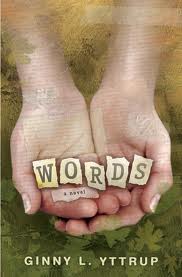
I mentioned in my last post that I was reading Words by Ginny L. Yttrup.  Don't ask me how to pronounce it.  I don't know.  But I have finished the book.  I didn't want to write about this book.  I wanted to read a book for enjoyment and not have to think and take notes. You'll wonder at my choice in a moment.  I knew I wanted to read this book before it came out.  It sounded so intriguing.  But I must admit though I had my doubts about the painful storyline.

Words is mainly told from two perspectives.  It starts with Kaylee, a ten-year old girl, abandoned by her mother and sexually abused by the boyfriend she left behind with her child.  Yeah, tough stuff.  To escape her horrible reality, she reads and collects words.  Due to the trauma she has endured, though, she stops speaking, so those words remain confined to her mind and paper.

The second perspective is Sierra's, a woman who is holding onto the pain of being responsible for the death of her baby daughter 12 years earlier.  As predicted, their lives connect and they eventually both find freedom in Christ and healing from their past.

Although the plot seemed a little far-fetched at times, I really enjoyed this book because of how the author dealt with such a painful subject.  Many books that deal with similar topics often contain graphic detail and cause your stomach to churn.  I like detail, and sometimes it's necessary, but not too much in these cases.  The most graphic details in the book were related to drug abuse.

How does an author write a book about abuse and effectively connect with the reader without being graphic?  Easy.  Tell the story from the abused child's perspective.  A child who is alone, scared, embarrassed, ashamed, and thinks it's her fault.  A child who refuses to tell anyone, or should I say, write it for anyone.  A child who wonders if she's a whore.  A child who will only elude to what's happening to her and shares with the reader how it affects her.  That tugs at the reader enough without graphic details.

In the back of the book, we also learn that the author wrote this book out of personal experience and now helps women suffering trauma from sexual abuse.  She knows.  She understand what victims suffer and makes her the perfect candidate to write such a story.

I've read some great books and I enjoy detail, but when dealing with such difficult issues, you can do without and still write a great story.  In some cases, details become necessary, but not always.  Writers can connect with me without having to make me sick.

Tuesday, 14 June 2011

Life Without Limits Review

"Nick Vujicic is a man who has been a
great source of inspiration to me through
his videos so I was really excited when
he published his first book Life Without
Limits: Inspiration for a Ridiculously
Good Life. He certainly did not disappoint.
Nick was born in Australia in 1982
without arms and legs and his parents
were given no warning or any medical
explanation. He has overcome countless
challenges in life. Today, he’s a motivational
speaker and evangelist sharing
God’s love and hope with the world."

Read the rest of my review at Lighted Lamp Magazine.

Monday, 9 May 2011

Jane Eyre: Is Love Blind?

Love is blind. It' a common phrase. Is it true?

I did a little research on the phrase and found that it was first coined by Shakespeare. He used it in a few of his plays. The idea is that when a person falls in love, they become blind to the other person's faults. Emotions take over and they fail to see clearly. A research study has actually proven this to be true. The activity in areas of the brain that control critical thought are actually suppressed by love.

Some people think that before you get married, you should keep both eyes wide open and when you marry, keep one eye shut. That might not be such a bad idea.

This is one of the latest issues I've been thinking about in my study of Jane Eyre. When Jane first comes to Thornfield, she definitely takes notice of Rochester's faults, which in my opinion are many. He's honest with her that he has a past he regrets, although he normally doesn't explain them. And on top of that, Jane doesn't find him particularly attractive.

However, as the story progresses, her interest in the man, 20 years older than herself, grows. Interest turns to affection, and affection turns to love. By this time, she completely overlooks any of the faults she previously saw in him. Criticism has fled and love wins. Even when faced with the competition of another woman, Jane doesn't let it faze her. She's more in love with the man than ever. She's consumed by this and quickly begins to idolize the man.

The problem with Rochester is that he's a mysterious man and has a tendency to be deceptive. The reader can see the problem easily, but Jane is blinded to it. She disregards any questionable actions, motives or intentions. When Rochester proposes, she questions how long his love for her will last. He makes it clear that once they're married, she will be all his, attached to him like his watch and chain. He's going to control her. His flowery words and affection often quickly turn to rudeness. This still doesn't bother Jane. She seems to prefer insults to affection. It's almost as if she doesn't want to be or doesn't think she deserves to be properly loved.

Will her eyes be opened before she gets burned? You'll have to read the book for yourself to find out.